

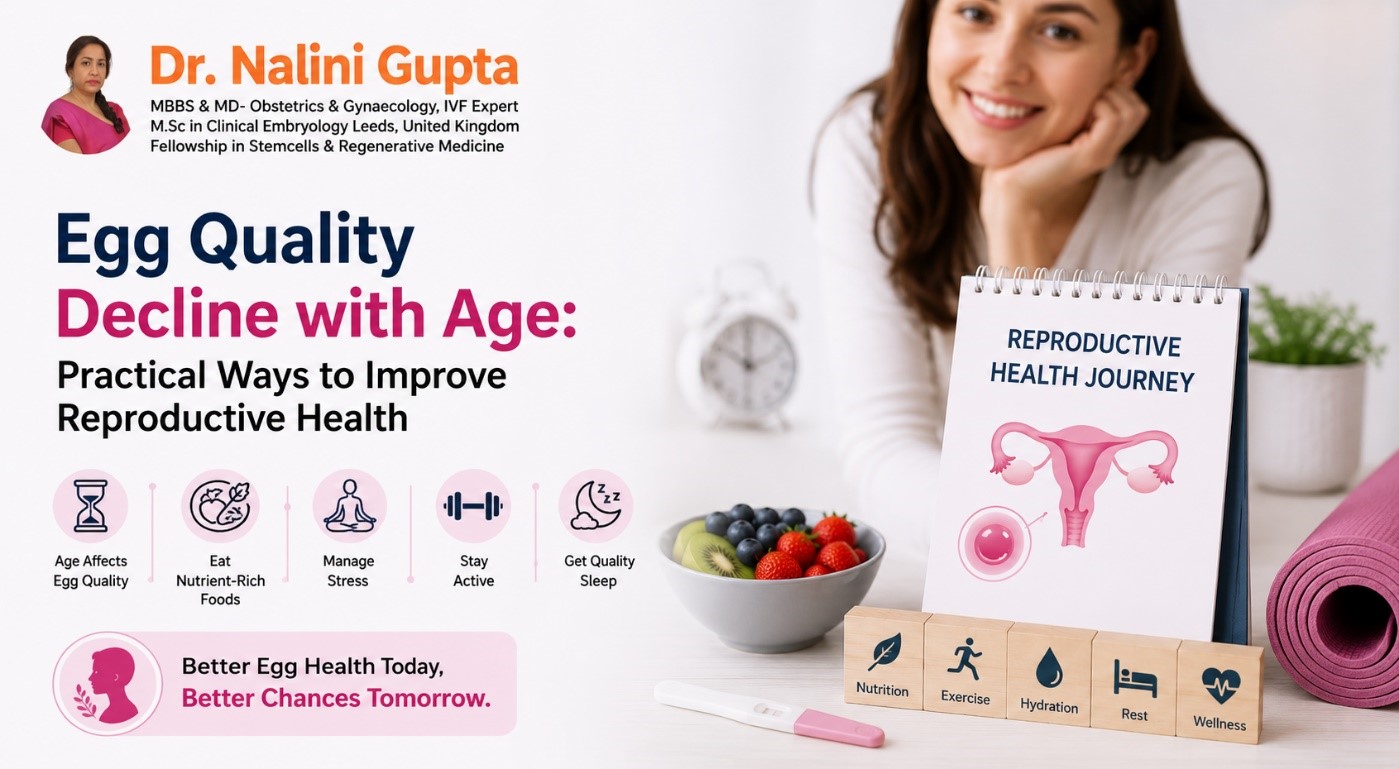
Every woman is born with a fixed number of eggs, and that number only goes one way as the years pass. It’s a fact of biology that surprises a lot of women when they finally sit down with a fertility specialist and hear it laid out plainly. By the mid-thirties, both the quantity and the quality of eggs start dropping at a noticeably faster pace, and this shift plays a bigger role in fertility struggles than most people realise. The good news? While no one can stop the clock, there’s a lot within a woman’s control when it comes to protecting what she has left. If you’ve been searching for how to improve egg quality naturally with age for better fertility, you’re already asking the right question. Delhi has a lot of good treatment options for people looking for this solution, with Dr. Nalini Gupta being one of the Best IVF Doctors in South Extension
Why Egg Quality Drops With Age
Eggs don’t renew themselves the way skin cells or blood cells do. Every egg a woman will ever have was already present at birth, sitting dormant until ovulation calls it into action. Over the decades, oxidative stress, environmental exposure, and cellular wear and tear take a toll on these eggs, and chromosomal abnormalities become more common too. This is why:
- Miscarriage risk rises with maternal age
- Conditions like Down syndrome become more common in pregnancies after 35
- Natural conception rates gradually decline year over year
This is simply how reproductive biology works, not a reflection of anything a woman did wrong.
Practical Ways to Support Egg Health
Diet is usually the first place to start, and it makes a real difference:
- Antioxidant-rich foods like berries, leafy greens, and walnuts help neutralise oxidative stress on egg cells
- Omega-3s from fish and flaxseeds support hormonal balance
- Folate and vitamin D play a quiet but important role in egg development
- Cutting back on processed sugar and trans fats matters just as much as adding the good stuff in
Sleep and stress get overlooked far too often. Poor sleep disrupts the hormones that regulate ovulation, and chronic stress keeps cortisol elevated in ways that interfere with reproductive signalling. Helpful habits include:
- A consistent sleep schedule
- Gentle, regular exercise
- Stress-relief practices such as yoga or meditation
A few other factors carry real weight too:
- Quitting smoking and cutting back alcohol, since both accelerate egg ageing
- Maintaining a healthy body weight, as being either underweight or overweight can throw ovulation off track
- Considering supplements like CoQ10, DHEA, or myo-inositol, which show promise for mitochondrial function within eggs, always under a doctor’s guidance
When Lifestyle Changes Aren’t Enough
Sometimes, even with every healthy habit in place, egg quality decline has already progressed far enough that natural conception becomes difficult. This is where timely medical evaluation matters:
- AMH levels and antral follicle counts give a clear picture of ovarian reserve
- Ovulation induction may help in earlier-stage cases
- IVF, with or without donor eggs, becomes the recommended path when the reserve is significantly reduced
This is the sort of situation that the right specialist can turn round. Dr. Nalini Gupta is a name that often comes up when people talk about the Best IVF Doctor in Delhi. She has vast experience in helping women with age-related fertility issues, with a treatment plan that is tailored to each woman’s actual hormonal and ovarian profile. Her clinic is often a preferred destination for patients seeking the best care and staff, due to her personalised, honest counselling style and her ability to set realistic expectations right from the first consultation.
The Takeaway
Egg quality decline is a natural part of ageing, but it isn’t something women have to face without options. Small, consistent shifts, better nutrition, quality sleep, stress management, and cutting harmful habits can meaningfully support reproductive health at any age. And when those steps aren’t enough on their own, getting evaluated early gives far more room for effective treatment. For anyone genuinely exploring how to improve egg quality naturally with age for better fertility, the combination of proactive self-care and expert medical guidance remains the most reliable path forward, and Dr. Nalini Gupta’s clinic in South Extension is a place where that guidance comes with both experience and empathy.
Frequently Asked Questions
Fertility generally starts declining around age 30, with a faster decline during the mid-to-late thirties. This happens because both the number of available eggs and the proportion of chromosomally healthy eggs decrease with age.
There is no proven natural method that can reverse age-related egg-quality decline. Balanced nutrition, regular activity, adequate sleep, avoiding smoking and limiting alcohol can support overall reproductive health.
No. AMH primarily provides information about ovarian reserve, meaning the estimated number of remaining eggs and the likely response to ovarian stimulation. It does not directly measure egg quality or guarantee natural pregnancy.
Evidence that these supplements improve egg quality or live-birth rates remains limited. DHEA can also cause side effects and should not be taken without evaluation and guidance from a fertility specialist.
Women under 35 should generally seek advice after 12 months of trying to conceive, while women aged 35 or older should consider evaluation after six months. Earlier assessment may be appropriate for irregular periods, previous ovarian surgery or known fertility concerns.
Conclusion
Egg quality decline with age is a natural biological process that cannot be completely stopped or reversed. However, balanced nutrition, regular exercise, sufficient sleep, a healthy body weight and avoiding smoking can support overall reproductive health.
Women planning pregnancy later or experiencing difficulty conceiving should consider timely fertility evaluation. Tests such as AMH and antral follicle count can help assess ovarian reserve, while age and medical history provide essential context. Personalised guidance from a fertility specialist can help women understand their options and make informed decisions without relying on unproven supplements or unrealistic promises.