

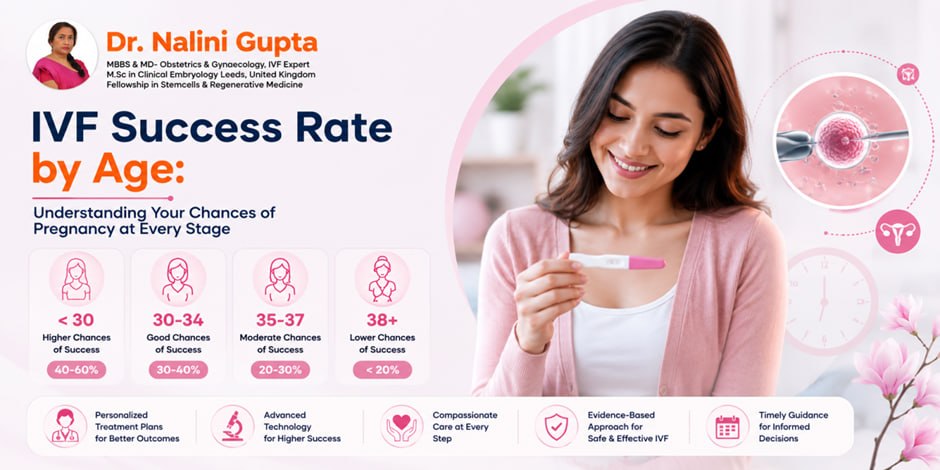
If there is one question fertility doctors hear more than any other, it is probably this one. Will it actually work for me? And honestly, the answer depends heavily on a single factor that nobody can control through willpower or diet plans. Age. IVF Success Rate by Age is one of the most researched areas in reproductive medicine, and understanding where you stand can completely change how a couple plans their next steps.
Why Age Matters So Much in IVF
Here is the blunt truth. Egg quantity and quality decline as women get older, and this decline is not gradual in a neat straight line, it actually speeds up after a certain point. A woman is born with all the eggs she will ever have, and by the time she reaches her late thirties, both the number and the genetic quality of those eggs have dropped noticeably. This is exactly why IVF Success Rate by Age charts show such a dramatic shift between the early thirties and the early forties. It is not about effort or health habits alone. Biology simply moves at its own pace.
IVF Success Rates in Your Twenties and Early Thirties
Women under 35 generally see the highest success rates with IVF, often ranging between 40 to 50% per cycle, depending on the clinic and individual health factors. Egg quality tends to be strong, ovarian reserve is usually healthy, and embryos created at this stage typically show fewer chromosomal abnormalities. This does not mean younger women never face fertility struggles. Conditions like PCOS or endometriosis can still complicate things. But purely from an age perspective, this window offers the most favourable odds.
What Changes in the Mid to Late Thirties
Somewhere around thirty-five, the numbers start shifting. Success rates typically drop to around 35%, and by the late thirties, closer to 25% per cycle. Egg quality declines faster during this period, and the risk of chromosomal abnormalities rise correspondingly. This does not mean pregnancy becomes unlikely. It simply means the margin for delay narrows, and couples in this age bracket are often advised not to wait too long before seeking evaluation if things are not progressing naturally.
IVF After Forty: What to Realistically Expect
Past forty, success rates using a woman’s own eggs typically fall into the ten to fifteen percent range per cycle and continue declining further after forty-three. This is where many specialists start discussing options like donor eggs, which can significantly improve success rates regardless of the woman’s age, since donor eggs usually come from younger donors with healthier ovarian reserves. It is a difficult conversation for many couples, but an honest one, and one that a good clinic will not avoid or sugarcoat.
Does Male Age Play a Role too?
Yes, though the effect is generally less pronounced than with female age. Sperm quality does decline gradually with age, and older paternal age has been linked to slightly higher rates of certain genetic conditions in offspring. It is not the dominant factor in IVF Success Rate by Age discussions, but it is not irrelevant either, and a complete fertility evaluation should always look at both partners.
Factors That Can Improve the Odds
Age isn’t the only factor in the room. Ovarian reserve testing, lifestyle modifications, treatment of any underlying conditions such as thyroid disease or insulin resistance and choice of an experienced clinic have meaningful effects on outcomes. This is the reason that couples are suggested to choose the best IVF Treatment in Delhi, as before finalising any protocol, all the detailed diagnostic testing is done and not a generic cycle.
Making Decisions Without Panic
Reading statistics can feel overwhelming, understandably so. But numbers are averages, not guarantees, and plenty of individual cases fall outside the expected range in either direction. The smarter move is getting a personalised fertility assessment rather than making decisions based on age alone. A proper workup tells a much more accurate story than any general chart ever could.
Where to Go Then?
Understanding IVF Success Rates by Age can help couples set realistic expectations but should never replace an actual consultation based on an individual’s health and history.
This is the kind of personalised assessment Dr. Nalini Gupta Fertility Centre is an expert at, taking into account more than age alone for a treatment plan based on each couple’s unique fertility profile. The clinic, known as the Best IVF Treatment in South Extension, provides a mix of experienced medical guidance and honest conversations to help couples make informed decisions at each step of their journey.