

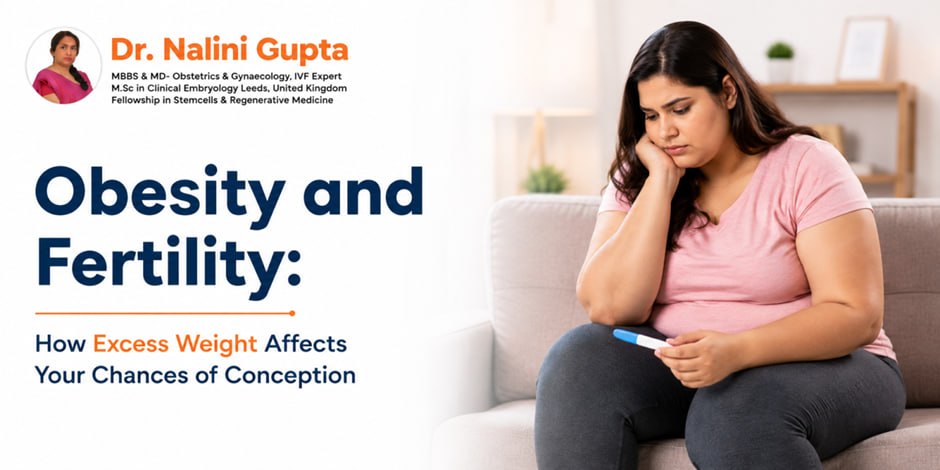
Ever wonder why some couples try for months, sometimes years, without any luck, while doctors keep pointing back to the same word? Weight. It sounds almost too simple to be true, but the science behind Obesity and Fertility is not something anyone can brush off. This is not about how someone looks in the mirror. It is about hormones, ovulation, sperm health, and whether a body is even in a position to support pregnancy in the first place.
Understanding the Link Between Obesity and Fertility
Here is something most people do not realise. Fat is not just sitting there quietly. It is active. It produces oestrogen, and when there is too much of it floating around, the whole hormonal rhythm gets thrown off balance. Suddenly, periods become irregular or vanish altogether. Sound familiar? For a lot of women, this is the first quiet sign of Polycystic Ovary Syndrome, one of the biggest reasons couples struggle to conceive. And no, men do not get a free pass here either. Extra weight chips away at testosterone, drags down sperm count, and slows sperm motility. Two people, one shared problem.
How Obesity Affects Women Trying to Conceive
Think of the hypothalamic pituitary ovarian axis as the control room for a woman’s cycle. Excess weight messes with the signals in that control room. The result? Anovulation, where the ovaries simply skip releasing an egg that month. Even when an egg is released, research keeps showing a pattern of lower egg quality and a higher chance of early miscarriage in women carrying extra weight. Add insulin resistance to the mix, which is incredibly common in this group, and now oestrogen and progesterone are both struggling to do their jobs properly.
The Male Side of Fertility
Somewhere along the way, society decided infertility was a “women’s issue”. It is not, and it never was. Obesity in men raises scrotal temperature, disturbs hormone levels, and triggers oxidative stress that quietly damages sperm DNA. Multiple studies show a clear pattern here, men with higher BMI tend to have noticeably lower sperm concentration. When both partners work on their weight together, the odds of conceiving naturally go up. Teamwork, basically.
Obesity and IVF Success Rates
Even couples turning to assisted reproduction are not immune to this. A higher BMI often means a poorer response to ovarian stimulation drugs, fewer eggs retrieved, and lower implantation rates once embryos are transferred. That is exactly why specialists at the Best Infertility Clinic in Delhi tend to push for weight management before diving into treatment. It is not about delaying hope. It is about giving that hope a real shot at working.
Practical Steps Toward Better Fertility Health
Here is the part that should feel encouraging. This is reversible for many people. Losing just five to ten percent of body weight has been shown to bring back regular ovulation in a good number of women with PCOS. No extreme diets required. Better food choices, some regular movement, and decent sleep, that combination alone can shift things within a few months. Cut back on processed food and sugar, move a little more, and the body often starts recalibrating on its own.
When to Seek Professional Guidance
But what if lifestyle changes alone are not cutting it? That is the moment to stop guessing and get answers. The Best Gynaecologist in Delhi can run the right tests, check ovarian reserve, and map out a plan that tackles weight and fertility side by side instead of treating them as separate problems. Waiting too long rarely helps. Getting evaluated early often saves couples months, sometimes years, of unnecessary stress.
Conclusion
Obesity and Fertility are more interconnected together than most people expect, but interconnected does not mean hopeless. Whether the goal is a natural pregnancy or preparing for IVF, tackling weight early is one of the smartest moves a couple can make.
Dr. Nalini Gupta Fertility Centre is a good example of how this should actually be handled. Instead of rushing couples into procedures, the team takes the time to look at hormonal health, ovarian reserve, and metabolic factors first, then builds a plan around the real picture. If you are searching for the best infertility clinic in Delhi with specialists who actually listen before they treat, this kind of personalised approach is worth paying attention to.