

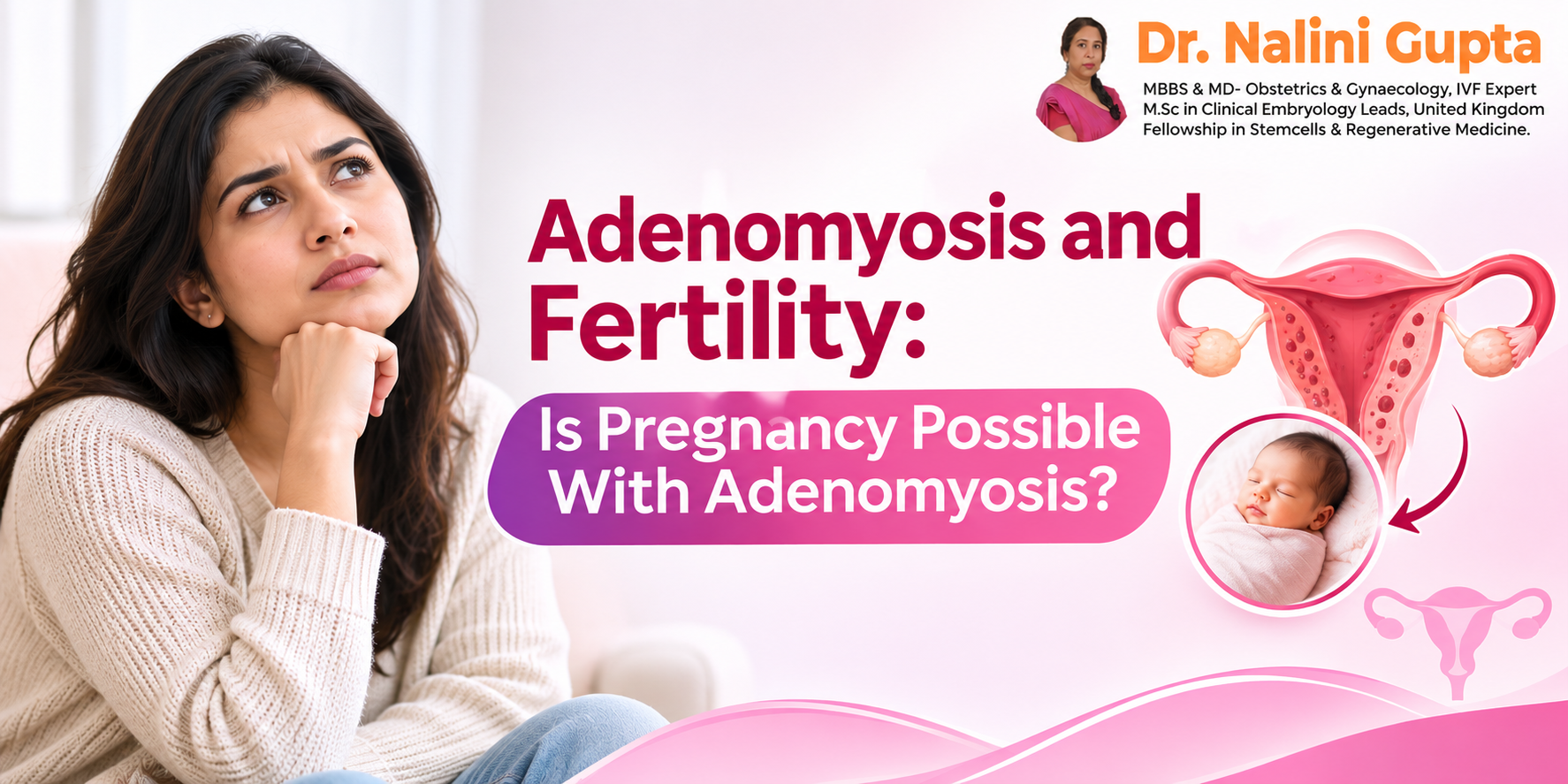
You finally get a name for the heavy, aching periods you’ve lived with for years. Adenomyosis. And then the next thought hits like a brick: “Can I still become a mother?” It’s a fair question, and honestly, it’s the one most women ask first. The short answer is yes, often. Dr. Nalini Gupta Fertility Care in South Extension, known to many couples as the Best Infertility Centre in Delhi, guides women through exactly this worry.
So what is adenomyosis?
Normally, the tissue that lines the uterus stays inside the uterine cavity. In adenomyosis, it grows into the muscular wall of the uterus instead. Each month that tissue responds to hormones, thickens and bleeds, but it has nowhere to go. The result is an enlarged, tender uterus and some very unpleasant periods.
Symptoms worth noticing
- Heavy or prolonged menstrual bleeding
- Severe cramps that worsen over time
- Pelvic pressure or a bloated, heavy feeling in the lower belly
- Pain during sex
- Spotting between periods
- Difficulty getting pregnant
Some women have almost no symptoms at all. Others are floored by them. It varies a lot, and that’s partly why diagnosis takes so long.
How does it affect fertility?
Researchers are still piecing together the link between Adenomyosis and Fertility, but a few things seem to matter. The uterine wall may contract in ways that make it harder for an embryo to implant. Chronic inflammation inside the uterus can create a less welcoming environment. Hormonal signalling may also get disturbed.
Adenomyosis can also appear alongside endometriosis or fibroids, which adds more layers. Does that mean you can’t conceive? No. Many women with adenomyosis do get pregnant. It may take longer, or need some medical support, and the risk of miscarriage or certain complications can be somewhat higher, so closer monitoring helps.
Can you actually get pregnant?
Yes, and the odds improve when the condition is identified and managed properly. Pregnancy with Adenomyosis can happen naturally in milder cases. For others, treatment comes first or runs alongside fertility care.
Options your doctor may discuss:
- Medication to control pain and bleeding while you plan
- Hormonal treatment to quieten the disease before attempting conception
- Ovulation tracking or ovulation induction
- IUI in selected cases
- IVF, sometimes with a frozen embryo transfer after a period of hormonal suppression
- Surgery in carefully chosen situations
There’s no single path. Age, ovarian reserve, how widespread the disease is and how long you’ve been trying all shape the plan. A good specialist builds it around you, not around a template.
Getting diagnosed properly
A transvaginal ultrasound is usually the starting point, and an MRI can add detail when the picture is unclear. Don’t accept “just fibroids” or “just hormones” if your symptoms don’t fit. Anyone worried about Adenomyosis and Fertility should get a second look from someone who sees these cases daily. It can change everything.
A few honest tips
Track your cycles and pain. Write down how many pads you use. Bring old reports to every visit. And please don’t wait years before asking about fertility if you’re over 35 or already struggling. Time matters, and it’s easier to have options than regrets.
Who to Consider?
Adenomyosis is a hurdle, not a full stop. With the right plan, many women planning pregnancy with Adenomyosis do hold their babies in the end.
If you want a team that explains every step in plain language, Dr. Nalini Gupta’s clinic is ranked by many patients among the best IVF centres in South Extension. Book a visit, bring your questions, and let’s figure out your route together.