

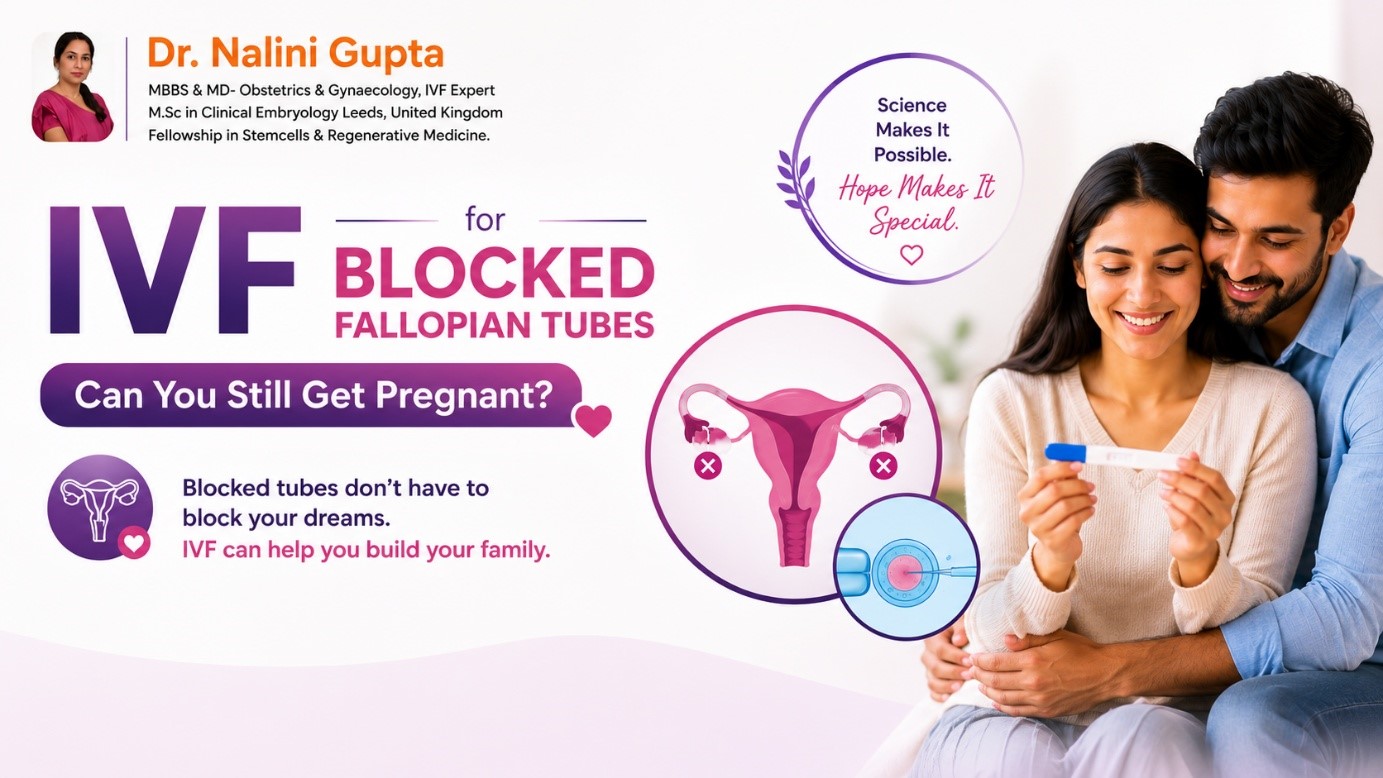
A blocked fallopian tube diagnosis lands hard for most women, mainly because it sounds so final. Years of trying, and then a scan reveals the reason, tubes that simply won’t let egg meet sperm the way nature intended. Here’s the reassuring part though, blocked tubes don’t have to mean the end of the road toward parenthood, not even close.
Understanding What Blocked Tubes Actually Mean
The fallopian tubes serve as the meeting point for egg and sperm and the pathway through which a fertilized egg travels to the uterus. When these tubes become blocked, whether from infection, endometriosis, scar tissue after surgery, or pelvic inflammatory disease, natural conception becomes extremely difficult or sometimes impossible. Blockages can occur on one side or both, and the location along the tube matters too, some blockages sit near the ovary, others closer to the uterus.
Why IVF Bypasses the Problem Entirely
Here’s what makes IVF genuinely different from other fertility treatments for this specific condition. Since IVF involves retrieving eggs directly from the ovaries and fertilizing them in a lab setting before transferring the resulting embryo straight into the uterus, the fallopian tubes essentially get skipped altogether. It doesn’t matter whether they’re blocked, scarred, or removed entirely, the tubes simply aren’t part of the equation anymore. This is precisely why doctors so often recommend IVF as the first-line treatment once tubal blockage gets confirmed, rather than attempting surgical repair that carries mixed success rates.
Diagnosing the Blockage
A hysterosalpingogram, commonly called an HSG, remains the standard test for detecting tubal blockages. Dye gets injected through the cervix, and X-ray imaging tracks whether it flows freely through the tubes or gets stopped somewhere along the way. Laparoscopy offers another diagnostic route, enabling doctors to look inside the pelvic region and sometimes even repair small blockages in the same operation.
Hydrosalpinx and Its Effect on IVF Success
There is one specific condition that is important to understand, called a hydrosalpinx. This is when a blocked tube overflows with fluid. This fluid can leak back into the uterus and impede the implantation of an embryo, lowering the success of IVF if left untreated. In such cases, many fertility specialists recommend that the affected tube be removed or clipped before starting IVF, and research consistently shows that this improves pregnancy outcomes.
What the IVF Process Looks Like
Ovarian stimulation medications encourage multiple eggs to mature, which then get retrieved through a minor procedure under sedation. Fertilization happens in the lab, either through conventional IVF or ICSI depending on sperm quality, and the resulting embryos get monitored for several days before the strongest one gets selected for transfer. Since the tubes play no role in this entire sequence, blocked tubes stop being a barrier the moment IVF becomes the chosen path.
Success Rates and Realistic Expectations
IVF success rates for tubal factor infertility tend to be comparable to, sometimes even better than, other causes of infertility, largely because the underlying issue is purely mechanical rather than related to egg quality or hormonal imbalance. Age still plays the biggest role in determining outcomes, alongside factors like sperm quality and overall reproductive health. A thorough evaluation before starting treatment gives couples a much clearer, more realistic picture of their individual chances.
Emotional Reassurance Matters Too
A tubal blockage diagnosis can feel like a door closing, but for most patients, it actually opens a clearer, more direct path toward pregnancy through IVF. Working with a team that explains each step patiently, without rushing through complex medical information makes an enormous difference in how manageable the whole journey feels.
Couples who are suffering from tubal infertility often benefit from the Best Fertility Clinic in Narela, where they can get an accurate diagnosis, a personalized treatment plan, and the experienced guidance that turns a scary diagnosis into a manageable next step. Dr. Nalini Gupta Fertility Care, with her sophisticated IVF protocols and genuinely caring approach, helps patients from Narela and nearby areas overcome tubal blockages and achieve the pregnancy they have been dreaming of. This specific challenge, though intimidating, need not be the final chapter.