

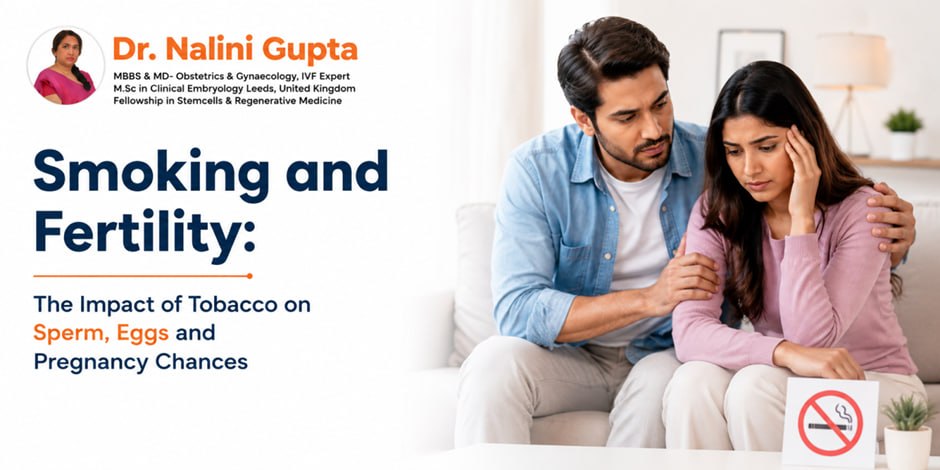
Everyone knows smoking is bad for the lungs. But how many people actually connect it to a positive pregnancy test, or the lack of one? Smoking and Fertility have a relationship that is far more direct than most couples realise, and honestly, it is one of the most underestimated factors when it comes to conception troubles. This is not a scare tactic. It is chemistry, biology, and years of research all pointing in the same uncomfortable direction.
Why Smoking and Fertility Do Not Mix
Cigarettes contain over four thousand chemicals, and a good chunk of them are toxic to reproductive cells. Nicotine, cadmium, and carbon monoxide do not just sit in the lungs. They travel through the bloodstream and reach the ovaries, the testes, and eventually the uterus. Once there, they start interfering with hormone production and cell division. The link between Smoking and Fertility is not some vague correlation either. Clinical data has repeatedly shown that smokers take longer to conceive compared to non-smokers, sometimes significantly longer.
How Smoking Affects a Woman’s Eggs
Here is something that surprises a lot of women. Eggs are formed before birth. That means every cigarette smoked chips away at a finite reserve that cannot be replenished. Toxins from tobacco accelerate the depletion of ovarian follicles, which basically means the biological clock ticks faster for smokers. Smoking has also been linked to poor egg quality, higher rates of chromosomal abnormalities, and an increased risk of early menopause. Even secondhand smoke exposure has shown measurable effects on ovarian reserve. That is a tough pill to swallow for anyone trying to plan a family.
The Effect on Male Fertility
Men often assume fertility conversations do not apply to them. Big mistake. Smoking damages sperm in almost every measurable way, count, shape, and movement all take a hit. Studies show smokers tend to have lower sperm concentration and a higher percentage of abnormally shaped sperm compared to non-smokers. There is also growing evidence linking smoking to DNA fragmentation in sperm, which can affect embryo development even when conception does happen naturally. So no, this is not just her problem. “It never was.
Pregnancy Risks Linked to Smoking
Let us say conception does happen. The story does not end there. Smoking during pregnancy raises the risk of miscarriage, ectopic pregnancy, placental complications, and premature birth. Babies born to mothers who smoked are statistically more likely to have lower birth weight. It is a chain reaction, one habit quietly influencing outcomes at every single stage, from the moment an egg is fertilised to the day a baby is born.
Smoking and IVF Outcomes
Couples going through IVF are not exempt from these effects either. Smoking has been associated with lower egg retrieval numbers, reduced fertilisation rates, and poorer embryo quality during assisted reproduction cycles. This is exactly why specialists at the Best Infertility Centre in Delhi almost always bring up smoking withdrawal as one of the first conversations before starting any treatment protocol. It is a simple, controllable factor that can genuinely shift the odds in a couple’s favour.
The Good News: It Is Reversible
Here is where things turn hopeful. Quitting smoking, even just a few months before trying to conceive, has been shown to improve fertility outcomes for both partners. Sperm quality can bounce back within a few months of quitting. Egg quality does not fully reverse the damage already done, but stopping further exposure protects whatever reserve remains. The body is remarkably good at healing itself once the toxic exposure stops. It just needs the chance.
When Should Couples Seek Help
If quitting alone does not resolve fertility struggles within a reasonable timeframe, it might be time to get proper testing done. A fertility workup can reveal exactly how much impact tobacco use has had and what the realistic path forward looks like. Delaying this conversation rarely helps anyone.
Final Thoughts
The connection between Smoking and Fertility is backed by decades of research, and yet it remains one of the easiest risk factors to control compared to age or genetics. Quitting is hard, nobody is pretending otherwise, but the reproductive payoff makes it worth the fight.
Dr. Nalini Gupta Fertility Centre approaches this with the seriousness it deserves, guiding couples through lifestyle changes alongside medical evaluation rather than jumping straight to treatment. If you are looking for the best IVF Centre in South Extension that takes a thoughtful, root-cause approach to fertility, this kind of personalised care is exactly what to look for.