

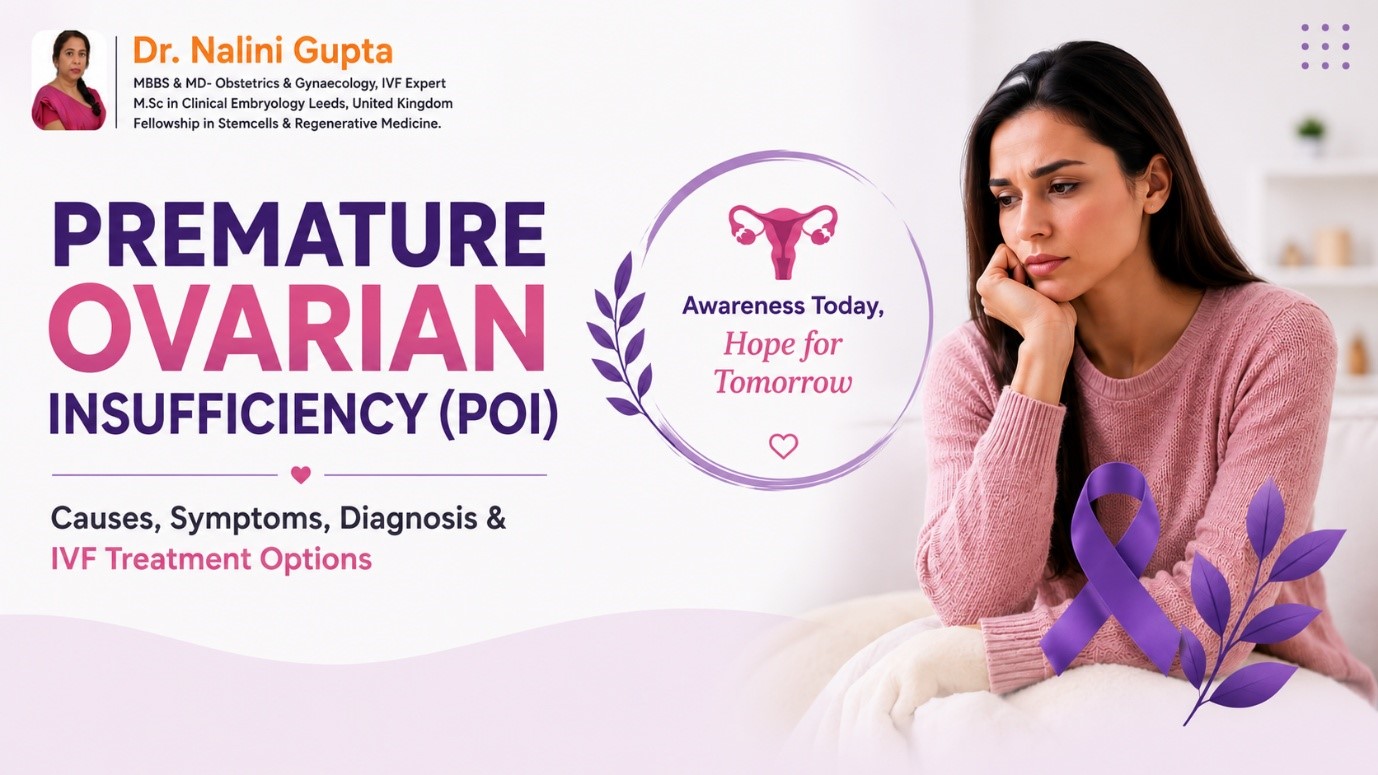
Here’s something most women don’t think about until it happens to them: your ovaries aren’t guaranteed to work on schedule. We expect them to hum along quietly until our forties, then wind down as menopause sets in. But for a certain group of women, that clock runs way faster than expected. Sometimes it’s their twenties. Sometimes early thirties. Doctors call this Premature Ovarian Insufficiency, or POI, and honestly? It’s one of those diagnoses that hits differently, especially if you’re still hoping to start a family.
People mix POI up with early menopause all the time. Fair enough; they sound similar. But there’s a real difference. Menopause is final; there’s no going back. POI is messier than that. Some women with POI still ovulate here and there, almost teasingly, and yes, natural pregnancies do happen even after diagnosis. Not common, but not impossible either.
What Causes POI
So what’s actually going wrong here? In simple terms, the ovaries stop functioning the way they should before age 40, either releasing fewer eggs or ovulating in a pattern nobody can predict. Hormone levels, especially estrogen, take a hit as a result. And this isn’t some rare, one-in-a-million thing. Roughly 1 in 100 women deal with this before turning 40.
What causes it? A few things, actually:
- Genetic conditions like Turner syndrome and Fragile X premutations
- Autoimmune disorders, where your own immune system turns on ovarian tissue by mistake
- Medical treatments such as chemotherapy or radiation, particularly when they happen during younger reproductive years
- Ovarian surgery, sometimes unavoidable with endometriosis or cysts, which can trigger POI if enough tissue gets affected
- No clear cause at all (this happens more than you’d think, and it’s frustrating for patients who just want an answer)
Recognising the Symptoms
The symptoms? They basically mimic menopause, just decades too early. Cruel timing, really. Here’s what to watch for:
- Periods that go missing or turn irregular, usually the first sign something’s up
- Hot flashes and night sweats
- Vaginal dryness
- Mood swings and trouble concentrating
- Fatigue that doesn’t make sense given everything else going on
- Poor sleep, lower libido
- Trouble conceiving despite trying for months
Here’s the thing, though: these symptoms sneak up quietly. Most women write them off as stress or a rough patch at work, long before they connect the dots.
How POI Is Diagnosed
Getting a diagnosis usually starts with a conversation, an honest one, about your menstrual history. From there, it moves into bloodwork:
- Follicle Stimulating Hormone (FSH) testing, since elevated FSH is one of the clearest red flags; doctors typically repeat this after a month to confirm the pattern isn’t a fluke
- Oestradiol levels, checked right alongside FSH
- Anti-Müllerian hormone (AMH) testing, which gives a clearer sense of ovarian reserve
- A pelvic ultrasound to count antral follicles directly
- Genetic or autoimmune screening, if the initial results point that way
Treatment and Fertility Options
Can POI be cured? Not exactly, no. Ovarian function isn’t something medicine can fully restore. But here’s what matters more: a POI diagnosis doesn’t slam the door shut on having children. Not even close. Treatment paths typically include:
- Hormone Replacement Therapy, usually the first move, aimed less at fertility and more at protecting bone density and heart health over the long run
- IVF with donor eggs, often the strongest option when ovarian reserve has dropped significantly, since it removes egg quality from the equation entirely; success rates here tend to rival those of much younger women
- IVF using a patient’s own eggs, possible for women with occasional ovarian activity, though this route demands patience since success rates run lower
- Fertility preservation: freezing eggs or embryos while some function remains is especially worthwhile for women caught early or facing treatments like chemotherapy
Finding the Right Care
A POI diagnosis lands hard. It shows up at a stage of life when fertility is usually the last thing on anyone’s mind, and that timing alone makes it harder to process. But here’s the reassuring part: with the right diagnostic clarity and a plan built around your actual situation, plenty of women go on to build the families they wanted all along. Anyone searching for the Best IVF Specialist in Mandawali usually isn’t just looking for a checklist of procedures. They want someone who actually takes the time to understand their hormonal picture before jumping to conclusions.
Dr Nalini Gupta Fertility Care has spent years working with women navigating POI, offering detailed hormonal evaluations, IVF protocols built around the individual, and donor egg programmes shaped by each patient’s own reproductive history. That kind of attentiveness is exactly why she keeps coming up as one of the top choices when people search for the Best IVF Specialist in Mandawali. Based in South Extension, the clinic treats every case as its own story, because POI really does look different from woman to woman, and cookie-cutter treatment plans just don’t cut it here. If you’re facing this diagnosis, reaching out sooner rather than later tends to open more doors, medically and emotionally both.